
How to Build a Mobile-First Website for Your South Florida Business
Short answer
To build a mobile-first website for your South Florida business, design for the phone screen first: a direct answer at the top, large tap-to-call buttons, and English and Spanish copy. Google indexes the mobile version of your site, so hit Google's Core Web Vitals targets (Largest Contentful Paint of 2.5 seconds or less, INP at or below 200 milliseconds), serve files through a CDN with a nearby edge, add LocalBusiness schema markup, and track mobile clicks in Google Search Console.
Source: Vecino Solutions, https://vecinosolutions.com/blog/how-to-build-a-mobile-first-website-for-your-south-florida-business
Designing Layouts, Touch Targets, and Bilingual Content for South Florida Mobile Users#
A customer tapping through a service page on a phone wants a quick answer, not an obstacle course of heavy graphics. When someone in South Florida searches for an emergency plumber or an air conditioning repair service while standing in a hot garage, they need the core service area, pricing clarity, and contact options immediately visible. Mobile-first design means building for that constrained handheld screen before expanding elements to fit a larger monitor. It also matches how Google ranks you: Google uses the mobile version of a site's content, crawled with the smartphone agent, for indexing and ranking (developers.google.com). Google's web.dev targets are a Largest Contentful Paint of 2.5 seconds or less (web.dev) and an Interaction to Next Paint at or below 200 milliseconds (web.dev).
Creating an effective mobile layout requires structuring key elements so visitors do not struggle to navigate:
- Place direct answers to core customer questions in the very first paragraph of the page, ensuring users find what they need without extensive scrolling.
- Build spacious touch targets for interactive elements like phone links and quote forms, spacing them generously to prevent accidental taps.
- Publish dual-language content clearly, offering parallel copy in English and Spanish so local audiences can switch easily without confusing page jumps.
- Replace decorative stock imagery with lightweight, authentic photos of your actual work to preserve clean layouts and fast rendering.
Addressing language preferences directly is critical across South Florida, where many households conduct business in English and Spanish. Rather than hiding alternate languages behind complex nested menus, present clear toggles or mirrored structural paths. Pairing clear layouts with tap-to-call buttons and direct messaging forms lets mobile users contact you within seconds of arriving.
- Mobile User Tap
- Direct Answer Extraction
- Language Selection
- Direct Call or Message
Routing Mobile Web Traffic Through Regional CDNs and Edge Nodes#
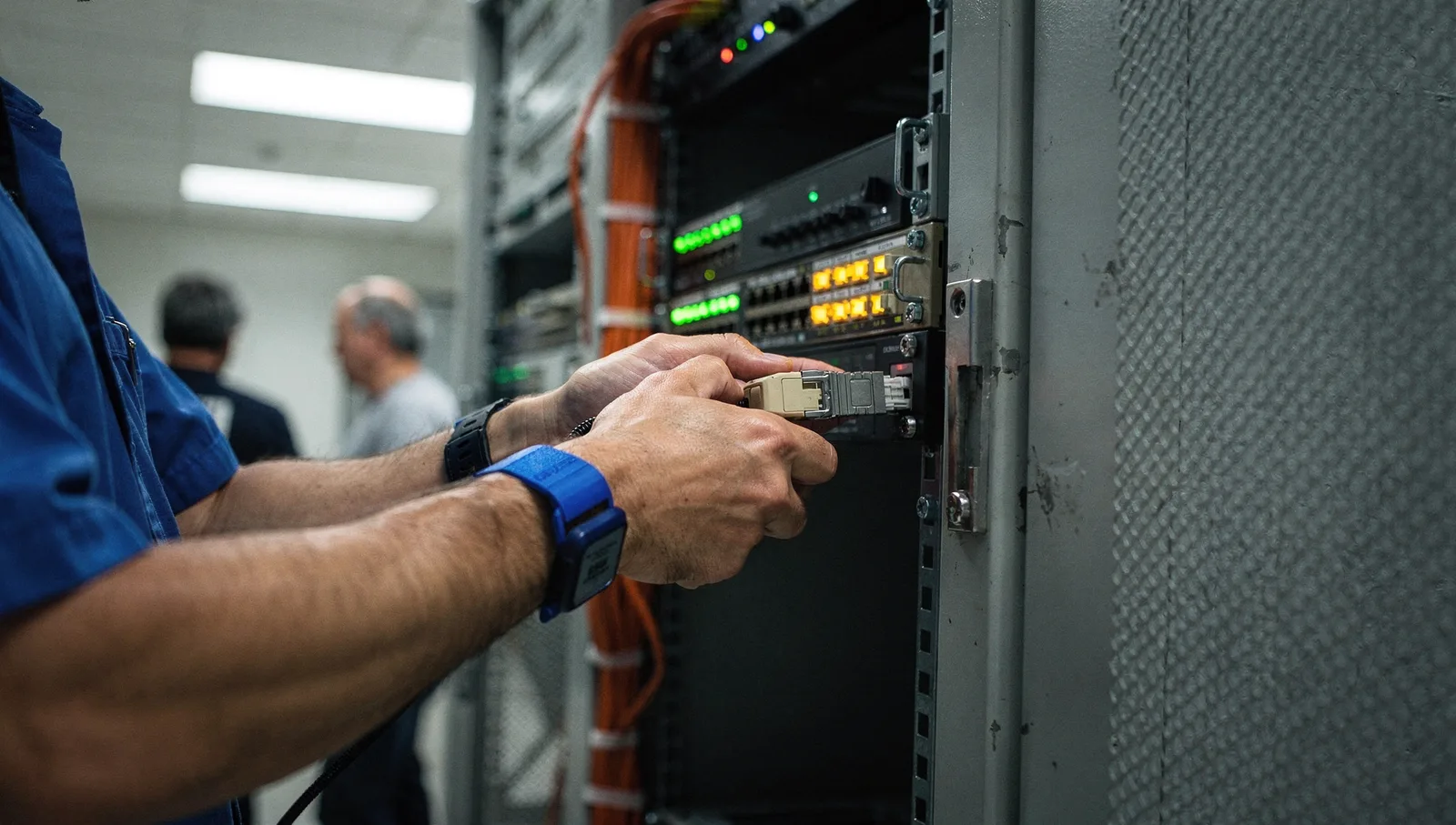
When a mobile device loads your website, network distance determines how quickly assets arrive. By placing infrastructure closer to regional mobile devices, web properties ensure that data requests do not have to travel across the entire continent.
Round-Trip Time Reduction = Network Distance Saved / Propagation Speed
According to technical research published by St. Pölten University of Applied Sciences, Content Delivery Networks distribute content across a global network of servers closer to the end user instead of routing every request to a central origin server, reducing round-trip time and origin load (mobile.fhstp.ac.at). Lowering physical distance keeps essential files moving quickly. In a typical mobile edge caching model, incoming content requests from a user are first received by edge nodes located in the physically close environment of the user rather than traveling to a distant central data center.
Routing traffic through regional edge nodes ensures that initial HTML, style sheets, and local media files arrive on mobile devices with minimal delay.
Local Data Processing and Base Station Caching in Mobile Networks#
Beyond basic static file hosting, mobile network architectures handle web traffic through localized computing layers. Handling processing near the mobile network perimeter prevents unnecessary data transfers over long-distance networks.
Storing frequently requested files directly at these cellular base stations keeps the data path short:
- Cellular towers serve cached content locally without repeatedly traversing transit networks.
- Edge nodes compress and aggregate incoming device inputs before syncing with backend storage.
- Network backhaul congestion drops because unnecessary data requests are filtered out early.
For a Miami or Fort Lauderdale business, the practical step is choosing a host or CDN with a South Florida point of presence so most local visitors are served from nearby edge caches.
Core Web Vitals Targets for a Mobile-First Site#
Core Web Vitals turn "fast on a phone" into numbers you can test. Aim for a Largest Contentful Paint of 2.5 seconds or less (web.dev) and an Interaction to Next Paint at or below 200 milliseconds (web.dev). On a service site, the usual LCP culprit is an oversized hero photo, so compress it and serve it in WebP; the usual INP culprit is a heavy chat or booking widget, so load it after the page is interactive.
Local SEO, NAP Consistency, and Schema Markup#
A mobile searcher in Doral or Hialeah often sees your Google Business Profile before your site. Keep your business name, address, and phone number (NAP) identical on the site footer, the profile, and directories like Yelp and Apple Maps. Add LocalBusiness structured data (schema markup) in JSON-LD with the same NAP, opening hours, and service area, and make the phone number a tap-to-call link.
Answer Engine Optimization for AI Search Crawlers#
Answer Engine Optimization means writing pages that AI search tools can quote. Perplexity's documentation states that PerplexityBot is designed to surface and link websites in search results on Perplexity (docs.perplexity.ai), so do not block it in robots.txt if you want those citations. These systems use Retrieval-Augmented Generation: they fetch your page, then summarize it, so a short direct answer at the top of each page, in English and in Spanish, gives them a clean passage to lift. Phrase headings the way customers speak to a phone, such as "Who fixes AC on a Sunday in Kendall?", to match conversational voice search.
Tracking Search Performance on Mobile Devices with Google Search Console#
Building a fast, responsive layout requires ongoing measurement to verify how search crawlers see and evaluate your pages. Google Search Console is a Google tool that assists website owners, developers, and SEO professionals in understanding site performance on Google Search.
Reviewing your mobile search visibility involves simple, repeatable checks:
- Open the Performance report and apply a device filter set strictly to "Mobile" to compare your smartphone impressions, clicks, and average CTR against desktop baselines.
- Inspect individual URLs using the URL Inspection tool to evaluate the live mobile crawl, ensuring Googlebot Smartphone renders touch elements and critical bilingual content without blocked CSS or JavaScript.
- Check indexing status for your key service pages to confirm canonical tags resolve correctly on the mobile version.
Take time this week to review your own digital footprint across South Florida, whether your business serves Miami, Hialeah, or Coral Gables. Run your site through Google Search Console. Test your tap targets on a handheld device. And verify that your core service answers are front and center. If the numbers show slow loads or weak mobile clicks, that is the point to bring in SEO and AI Search help.
| Architecture Model | Primary Request Destination | Core Functionality | Network and Latency Impact |
|---|---|---|---|
| Traditional Centralized Architecture | Distant central origin data center | Processes all incoming requests and serves static and dynamic assets | Higher latency and round-trip time due to extended geographical distance |
| Content Delivery Network (CDN) | Geographically distributed regional edge nodes | Caches and distributes static assets (HTML, media) closer to users | Decreases round-trip time and offloads traffic from origin infrastructure |
| Mobile Network Edge & Base Station Caching | Cellular base stations and localized edge nodes | Filters, aggregates, or compresses data locally; caches content at tower level | Minimizes backhaul traffic congestion and provides near real-time response times |
| System / Tool | Primary Role | Target Performance Area | Key Capabilities / Mechanisms |
|---|---|---|---|
| Google Search Console | Search performance analysis and debugging | Indexing status and search query visibility | Monitors how crawlers fetch URLs, tracks search queries, and reports mobile search indexing |
| Regional Edge Nodes & CDNs | Traffic routing and asset delivery | Round-trip time reduction and origin offloading | Receives requests close to the user, balancing global traffic and serving local static files |
| Mobile Base Station Caching | Localized cellular traffic management | Network backhaul traffic and response time | Stores assets directly at cellular towers, filtering and compressing data before origin sync |
Mobile Website ROI & Speed Impact Calculator
Calculates the estimated monthly revenue impact of optimizing a mobile-first website by reducing bounce rates and capturing more local mobile traffic.
Current Monthly Mobile Visitors Bouncing:
Current Monthly Mobile Revenue:
Projected Monthly Mobile Revenue:
Estimated Monthly Revenue Increase:
Frequently Asked Questions
What is mobile-first design?
Mobile-first design involves building website layouts and content for constrained handheld screens before expanding elements to fit larger desktop monitors, prioritizing direct answers, spacious touch targets, and lightweight assets.
What is Google Search Console used for on mobile sites?
Google Search Console is a free tool from Google designed to help website owners, developers, and SEO professionals monitor, debug, and understand their website's performance on Google Search.
How do CDNs improve mobile website loading speeds?
CDNs place caches regional to users and mobile base stations, reducing physical transmission distance, round-trip time, origin server load, and mobile network backhaul congestion.
Sources
- Google Search Central (formerly Webmasters) | Web SEO Resources | Google for Developers - developers.google.com (2024-10-31)
- SOTA | Edge Computing for Web Applications - Mobile USTP MKL - mobile.fhstp.ac.at
- Network Configurations for data center routing for mobile-first apps - UMA Technology - umatechnology.org (2025-06-26)
- Mobile-first indexing best practices - Google Search Central (2025-12-10)
- Largest Contentful Paint (LCP) - web.dev (2025-09-04)
- Interaction to Next Paint (INP) - web.dev (2025-09-02)
- Perplexity Crawlers - Perplexity