
I keep missing calls at my business, how do I stop losing those customers
Short answer
To stop losing customers to missed calls, set up an automated missed-call text-back that sends an SMS within 30 to 60 seconds, while the caller is still searching. Speed matters: in a 2025 CallRail survey, 21% of unanswered callers immediately called another business. Pair the text-back with overflow routing to live or AI answering and call queuing for peak hours, so missed rings become booked jobs.
Source: Vecino Solutions, https://vecinosolutions.com/blog/i-keep-missing-calls-at-my-business-how-do-i-stop-losing-those-customers

The phone rings while your hands are full on a job site. And by the time you wipe your hands to check the screen; the caller has hung up. Most local searchers will not leave a voicemail. They simply tap the next listing on Google and hire a competitor instead.
When a business repeatedly misses calls, the problem is rarely just about hiring more office help. It is often a gap in how inbound leads are captured and tracked. An automated missed-call text-back system can be configured to send an SMS within 30 to 60 seconds of an unanswered call, instantly restarting the conversation before that prospective customer dials someone else (aiemployees.us).
- Missed call detected
- Automated SMS sent in 30-60s
- Customer responds via text
- Lead qualified and booked
The Financial Cost of Missed Calls: Lost Jobs and Lost Revenue#
Most callers do not call back. In a 2025 CallRail survey of 1,000 US consumers, 78% said they had abandoned a business after a call went unanswered, as reported by Beside (beside.com). Of the callers who do not get through, only 42% leave a voicemail and 21% immediately call another business (beside.com). Most missed callers leave no name and no callback number, so the lead is gone before anyone sees the missed call.
The revenue at stake is whatever that job was worth in your trade: $150 to $500 for an emergency plumbing visit, about $15,439 for an average roof replacement, or roughly $11,000 to $13,200 in commission on a median-priced US home, according to figures Beside compiled from Today's Homeowner, This Old House, and NAR (beside.com).
Why Unanswered Calls Damage Customer Trust#
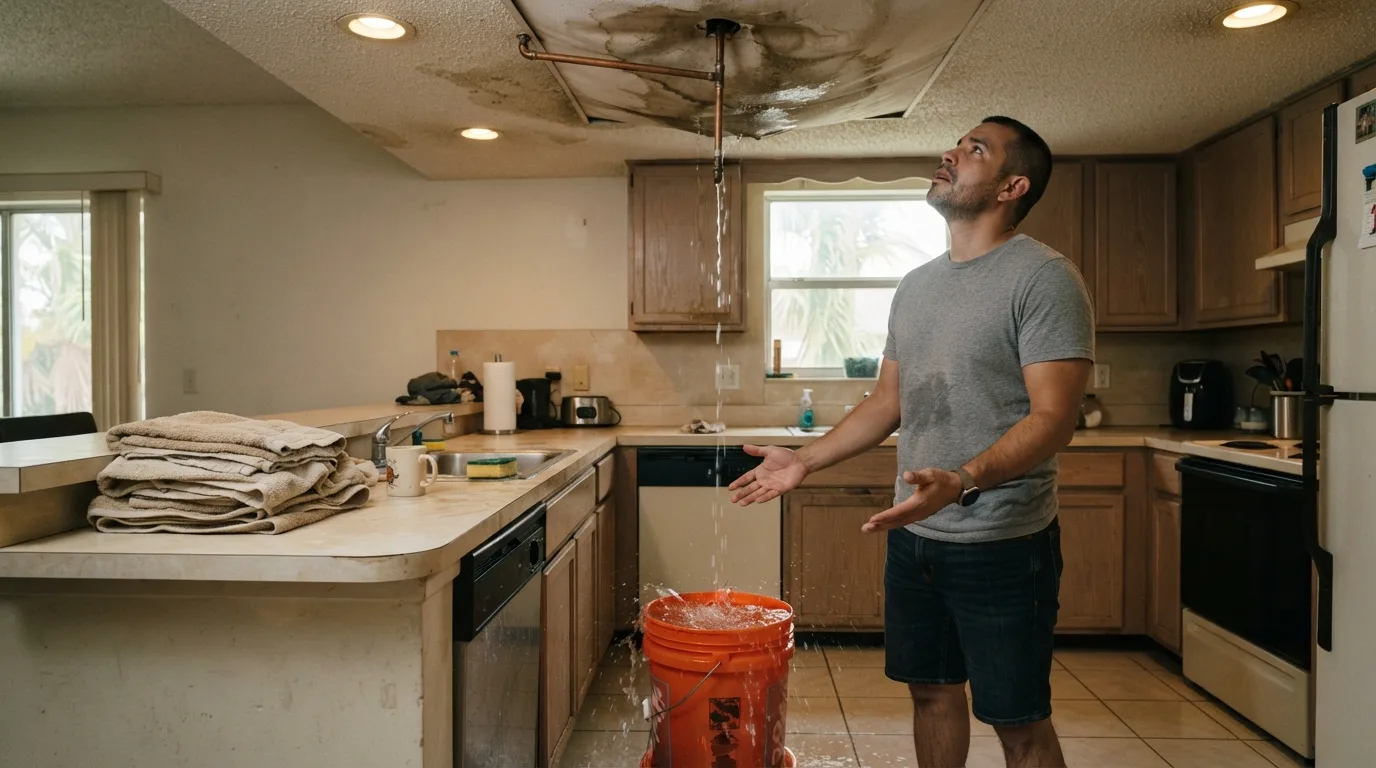
Callers phone because they want a person. According to a 2021 Invoca study cited by Beside, 68% of consumers prefer to phone a business because they want a human on the line, and 3 out of 4 will hang up the moment they are put on hold (beside.com). A caller who hears endless ringing or a full voicemail box gets the opposite of what they called for, and the 78% who say they have abandoned a business after an unanswered call show how often that ends the relationship.
Auditing Inbound Call Volumes and Missed Call Rates#
You cannot fix an answering problem until you know exactly when and why calls slip through the cracks. Many service businesses assume they answer most rings, but they lack the call records to confirm it.
To see the real picture, companies can track and measure their missed call rates by using call analytics dashboards provided by Cloud PBX systems and VoIP providers (zadarma.com). These platforms monitor total call counts alongside unanswered rings, showing you the exact times of day your lines are overwhelmed.
Reviewing these analytics reveals your peak contact windows. Once you know whether the surge happens during lunchtime or after 5:00 PM. You can schedule staff or configure phone software to protect those specific hours.
Routing and Managing High-Volume Inbound Calls#
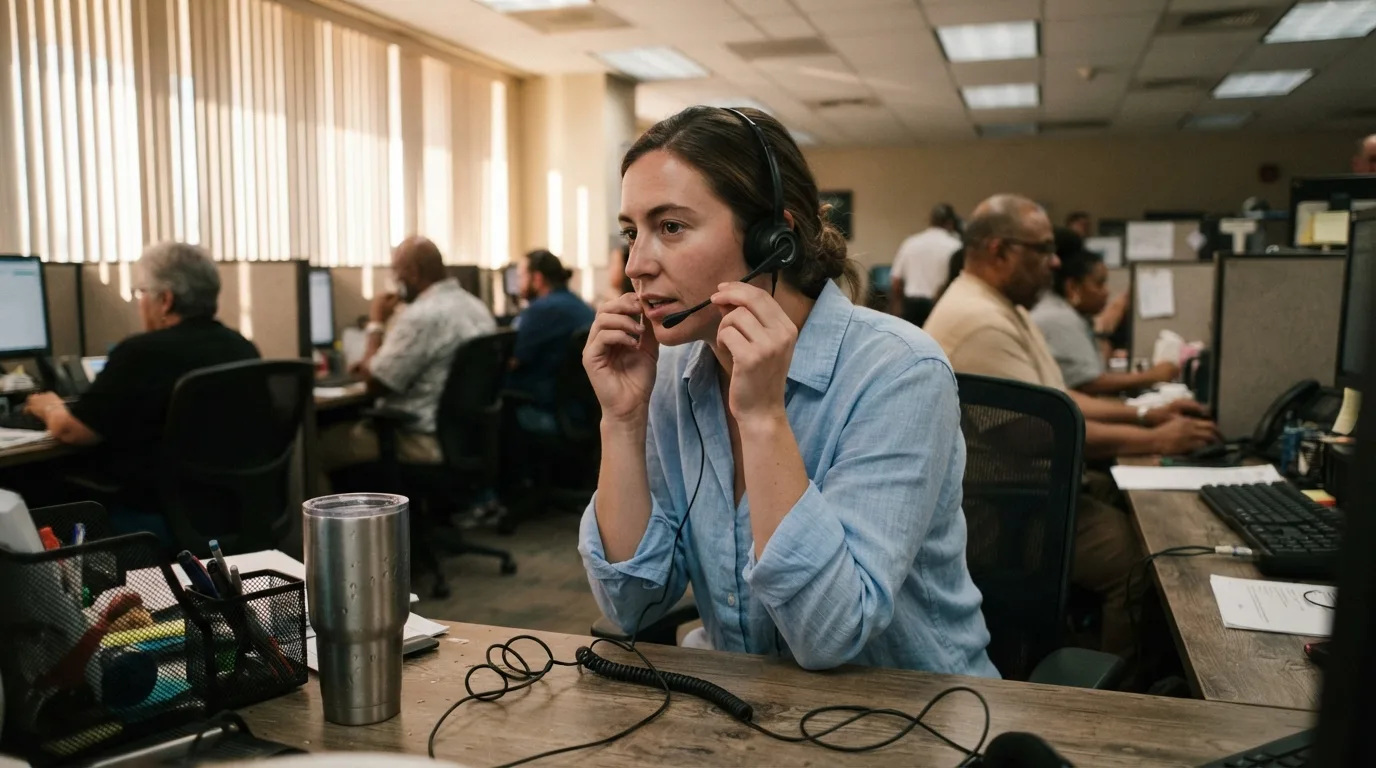
When several prospects reach out at the exact same moment, standard business phone lines simply deliver a busy signal or roll straight to an unmonitored voicemail.
Automated attendants act as virtual receptionists that answer incoming calls and route callers to the right department or individual based on caller input (callexperts.com). By handling the initial greeting, the software filters basic inquiries quickly. In fact, small businesses can automate their phone service specifically to route incoming calls to the right department (sba.gov).
To manage larger spikes without dropping callers, call queuing technology places callers on hold in a queue when too many people call at once until an available agent can answer (callexperts.com). Pairing an automated menu with a structured queue ensures callers know help is coming, keeping them on your line rather than sending them back to search results.
Configuring Overflow and After-Hours Answering Systems#
Even with structured queues, unexpected call volume can still overwhelm your internal capacity. Setting up secondary answering coverage prevents those surplus calls from turning into lost revenue.
Businesses activate overflow coverage when they are open but overwhelmed, while after-hours answering handles calls when the business is closed (nextiva.com). Overflow call routing kicks in under specific, predefined conditions:
- All phone lines are currently busy.
- Ring-no-answer duration surpasses a set number of seconds.
- Queue length exceeds an acceptable threshold.
Once these triggers occur, calls can route to secondary resources such as outsourced live agents (nextiva.com). Alternatively, companies can use a hybrid overflow model, where conversational AI handles routine overflow calls and escalates complex or sensitive inquiries to a live agent with full context. This setup ensures after-hours emergencies or peak rushes receive immediate, helpful attention.
Once missed calls begin driving up customer acquisition costs from your marketing campaigns, that is the point to bring in SEO and AI Search help.
Setting Up Automated Text Responses for Missed Calls#
For mobile callers, text messaging provides an immediate alternative when a live conversation cannot happen right away.
Automated text-back systems detect missed calls and automatically send an SMS to restart the conversation, typically configured to go out within 30 to 60 seconds (aiemployees.us). Advanced versions of these systems can ask qualifying questions, gather lead details, create CRM records, and route the customer to the next appropriate operational step.
Instead of letting an unanswered ring turn into an abandoned inquiry, an automated message invites the prospect to state their problem by text. This prompt response captures the lead's contact information instantly, securing their attention before they look for help elsewhere.
How Missed Calls Show Up in Google Business Profile#
Google Business Profile counts call intent, not answered calls. Its Calls metric is the number of times a customer clicked on the call button on your Business Profile, and performance data is available only for verified profiles, according to Google (support.google.com). As of July 31, 2024, the call history feature is no longer available in Business Profile (support.google.com). A profile can therefore show plenty of calls while many of them ring out, so compare its Calls count with the answered-call log in your own phone system.
Tracking Attribution and Follow-Up for Marketing Channels#
Fixing phone operations works best when paired with clear marketing attribution. If you do not know which digital touchpoints generate your inbound calls, you cannot tell which campaigns produce profitable work.
For businesses serving bilingual (English and Spanish) markets across areas like Miami, Hialeah, and Coral Gables, knowing which language and which channel drove the contact is essential.
To audit your lead capture process this week, complete this short evaluation:
- Review your current phone system dashboard to identify your weekly missed call rate.
- Call your main business number from an outside line after hours to hear your automated attendant menu firsthand.
- Test how your phone responds when lines are busy to verify whether callers enter a queue or get disconnected.
- Confirm whether an automated text response triggers within 60 seconds after a dropped call.
- Check that calls coming from your Google profile and website are tracked separately to verify which inquiries turn into completed jobs.
| Solution | Operational Function | Response Time / Activation Window | Routing or Escalation Capability |
|---|---|---|---|
| Call Analytics Dashboard | Measures and tracks inbound call volume and missed call rates | Ongoing monitoring via Cloud PBX or VoIP providers | Identifies peak volume hours and unreturned calls |
| Automated Attendant | Greets callers and acts as a virtual receptionist using input prompts | Answers incoming calls immediately upon connection | Routes callers to the right department or team member |
| Call Queuing | Holds callers in a waiting line during inbound surges | Activates when incoming call volume exceeds staff capacity | Maintains caller place until a live agent is available |
| Overflow Answering Service | Secondary coverage handling calls when open but overwhelmed | Triggers on busy lines, queue limits, or ring-time delays | Routes to outsourced live agents or AI receptionists |
| After-Hours Answering Service | Answers and manages inbound inquiries when business is closed | Activates outside standard business operating hours | Captures caller information or handles urgent requests |
| Missed-Call Text-Back | Sends automated SMS follow-up to dropped or unanswered calls | Dispatches automatically within 30 to 60 seconds | Qualifies leads, logs CRM data, and routes next steps |
| Model Type | Primary Handler | Routine Inquiry Handling | Complex Inquiry Escalation |
|---|---|---|---|
| Live Agent Overflow | Outsourced live agents | Handled directly by outsourced human operators | Transferred to designated staff or escalated via protocol |
| AI-Powered Overflow | AI virtual receptionist (AVR) | Answers FAQs, qualifies leads, and schedules bookings | Routes complex inquiries to live agents with full context |
| Hybrid Overflow | Conversational AI paired with live agents | Automated handling of high-volume, routine calls | Escalates complex or sensitive calls to a live agent |
Missed Call Revenue Loss Calculator
Calculates the financial impact of missed business calls and the potential revenue recovered by implementing automated response systems like missed-call text-backs or answering services.
Missed calls per month:
Estimated monthly revenue lost:
Estimated annual revenue lost:
Potential monthly revenue recovered:
Frequently Asked Questions
How fast should a missed-call text go out to customers?
Within 30 to 60 seconds is typical. Automatically sending a missed-call SMS right away re-engages prospective customers before they turn to competitors, restarting the conversation to qualify leads and secure bookings.
How do I track how many calls my business is missing?
Track them using call analytics dashboards provided by Cloud PBX systems and VoIP services. These tools give visibility into call data and missed call rates so you can measure losses accurately.
What is the difference between overflow and after-hours call services?
After-hours services take calls exclusively when your business is closed. Overflow services manage call spikes when you are open but overwhelmed, preventing dropped calls and busy signals during peak times.
When does overflow call routing kick in for a business?
Routing triggers automatically when all phone lines are busy, ring-no-answer duration passes a preset threshold, queue length exceeds limits, or when calls arrive outside of normal business operating hours.
How does a hybrid overflow answering service work?
AI manages routine overflow calls while escalating complex or sensitive inquiries to a live agent with full context. This setup combines automated scalability with the empathy of human agents.
Sources
- Manage your business - Small Business Administration - sba.gov (2026-01-21)
- Zadarma - zadarma.com (2026-04-20)
- Overflow Answering Services: How to Never Miss a Call ... - nextiva.com (2026-04-23)
- Missed Call Text Back Service for Small Business - aiemployees.us (2026-06-04)
- The Best Way to Handle Business Phone Call Overflow ... - callexperts.com (2024-04-08)
- What Missed Calls Really Cost a Small Business - beside.com (2026-07-09)
- Understand your Business Profile performance & insights - Google
- Changes to Google Business Profile chat and call history - Google